7TH MAYOR OF ST. LOUIS
John M. Wimer
"The Pride of the City"
The son of a Virginia blacksmith who journeyed west to become one of America's most beloved mayors — and gave his life defending his principles in the Civil War.
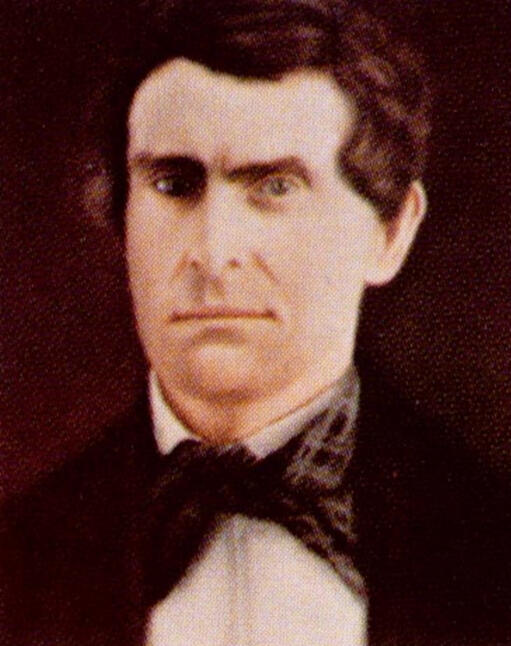
The son of a Virginia blacksmith who journeyed west to become one of America's most beloved mayors — and gave his life defending his principles in the Civil War.
Born in 1810 in Charlottesville, Virginia, John Wimer was the son of blacksmith Jacob Wimer. As a young man, he journeyed west to St. Louis — then a small French village on the frontier — where he would rise to become one of the city's most respected leaders. Elected mayor twice, in 1843 and again in 1857, he earned the affectionate nickname "The Pride of the City."
When the Civil War erupted in 1861, Wimer refused the federal loyalty oath and was imprisoned. He escaped from the notorious Alton Penitentiary and rode south to join the Confederate cause. On January 11, 1863, he was killed at the Battle of Hartville, Missouri — far from the city he once governed, but faithful to his convictions to the end.
1810
Born in Charlottesville, Virginia — son of blacksmith Jacob Wimer
1828
Journeys west to St. Louis, then a small French village on the frontier
1834
Marries Abigail Shotwell Wise; elected constable
1843
Elected Mayor of St. Louis at age 33
1849
Battles the Great Fire that engulfs the St. Louis waterfront
1855
Survives the Gasconade Bridge disaster
1857
Elected Mayor a second time on the Free Soil ticket
1858
Steam fire engine christened "John M. Wimer — The Pride of the City"
1861
Camp Jackson Affair erupts; Civil War comes to the streets of St. Louis
1862
Refuses the loyalty oath. Imprisoned at Gratiot Street Prison.
1862
Escapes from Alton Penitentiary and rides south to join the Confederacy
1863
Killed at the Battle of Hartville, Missouri
In 1861, St. Louis was the eighth-largest city in America — a booming river port caught between a secessionist governor and a federal arsenal holding more weapons than any post west of the Mississippi. The struggle for control of Missouri would pit neighbor against neighbor, and thrust its former mayor into an impossible conflict.
When Captain Nathaniel Lyon surrounded Camp Jackson with federal troops in May 1861, the resulting massacre killed at least 28 civilians and ignited the Civil War in Missouri. For men like Wimer, there was no longer any middle ground.
Wimer's story intersected with some of the most consequential figures of Civil War-era Missouri — men whose decisions would shape the fate of a border state and a divided nation.
Claiborne Fox Jackson
Governor of Missouri
A slaveholder and secessionist who secretly armed the state militia against the Union — and forced every Missourian to choose a side.
Nathaniel Lyon
Union Army Captain
The fiery federal officer whose raid on Camp Jackson turned a political crisis into a bloody street battle, igniting the war in Missouri.
Frank Blair Jr.
U.S. Congressman
A powerful Republican who organized St. Louis’s Unionist forces and wielded federal authority to suppress Confederate sympathy in the city.
Sterling Price
Former Governor & Confederate General
Once a moderate Unionist, he was radicalized by the Camp Jackson Affair and became the Confederacy’s most prominent commander in Missouri.
The full story of John M. Wimer is being brought to life in a historical novel that traces his journey from a Virginia blacksmith's son to the corridors of power in St. Louis — and finally to a frozen battlefield in the Missouri Ozarks.
Written by a direct descendant of Jacob Wimer through John's brother George Alexander, this novel is both a work of meticulous research and a family legacy.
Be the first to know when it's available